
Stop Peeling and Start Healing with Homemade Scrubs
Why Peeling Skin Calls for a Gentler Approach
A good diy face scrub for peeling skin doesn’t have to be complicated — and you probably already have most of what you need in your kitchen right now.
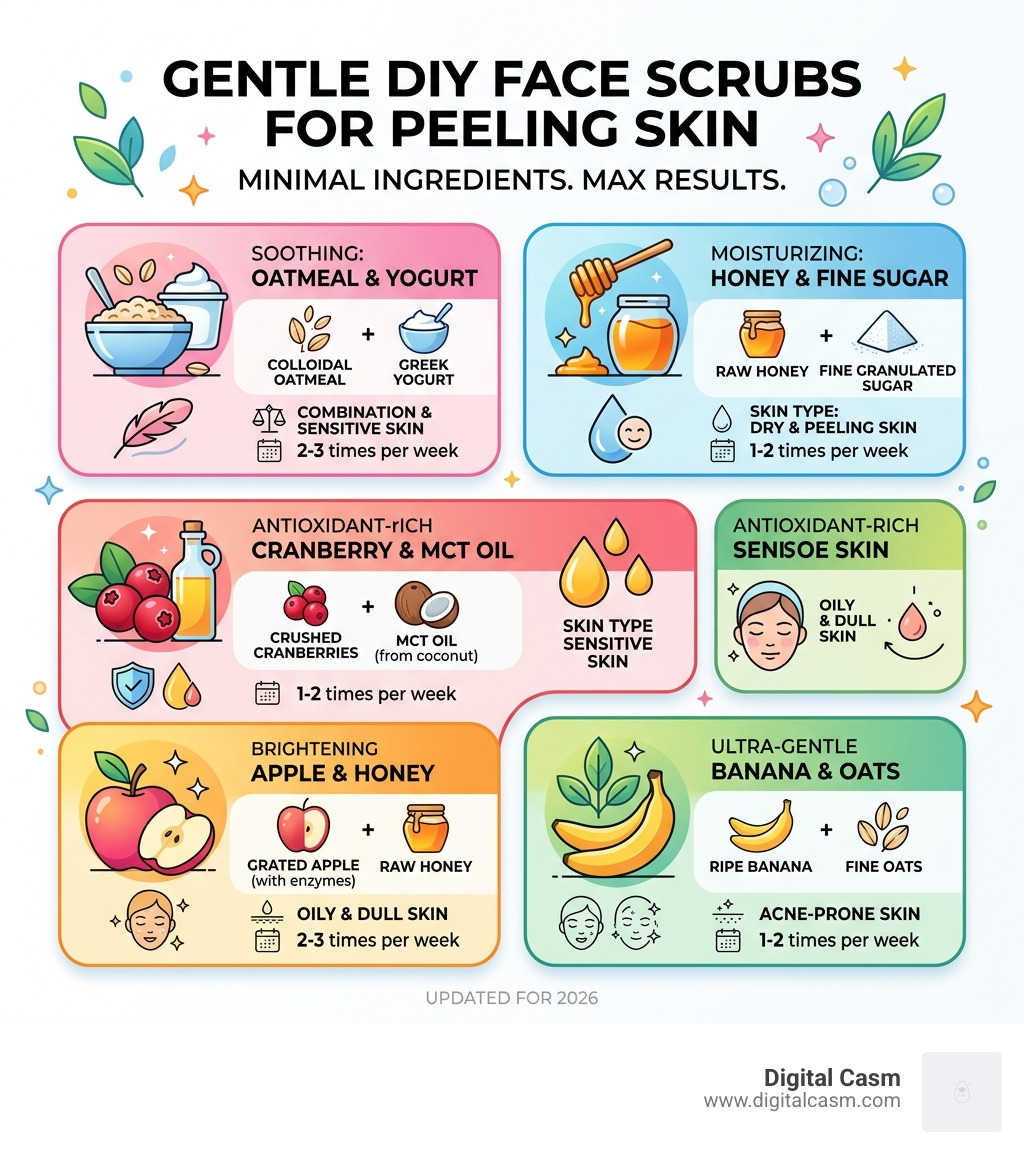
Here are the best gentle DIY face scrub options for peeling skin:
| Scrub Type | Key Benefit | Best For |
|---|---|---|
| Oatmeal + yogurt | Soothes and gently exfoliates | Combination/sensitive skin |
| Honey + fine sugar | Moisturizes while buffing | Dry, peeling skin |
| Cranberry + MCT oil | Antioxidant-rich, non-abrasive | Sensitive skin |
| Apple + honey | Enzyme exfoliation, brightening | Oily/dull skin |
| Banana + oats | Oil-free, ultra-gentle | Acne-prone skin |
Peeling skin is frustrating — especially when it shows up right before a big day and no amount of moisturizer seems to fix it.
Here’s the thing: moisturizer alone often isn’t enough. When dead skin cells build up on the surface, they form a barrier that blocks everything underneath — including the creams and serums you’re already applying.
As we age, skin cell turnover naturally slows down. That means dead cells stick around longer, leaving skin looking dull, rough, and flaky. The fix isn’t harsher products — it’s smarter, gentler exfoliation.
The good news? You can make an effective scrub at home in minutes, skip the salon visit, and actually enjoy the process.
Why Your Face is Peeling and How Exfoliation Helps
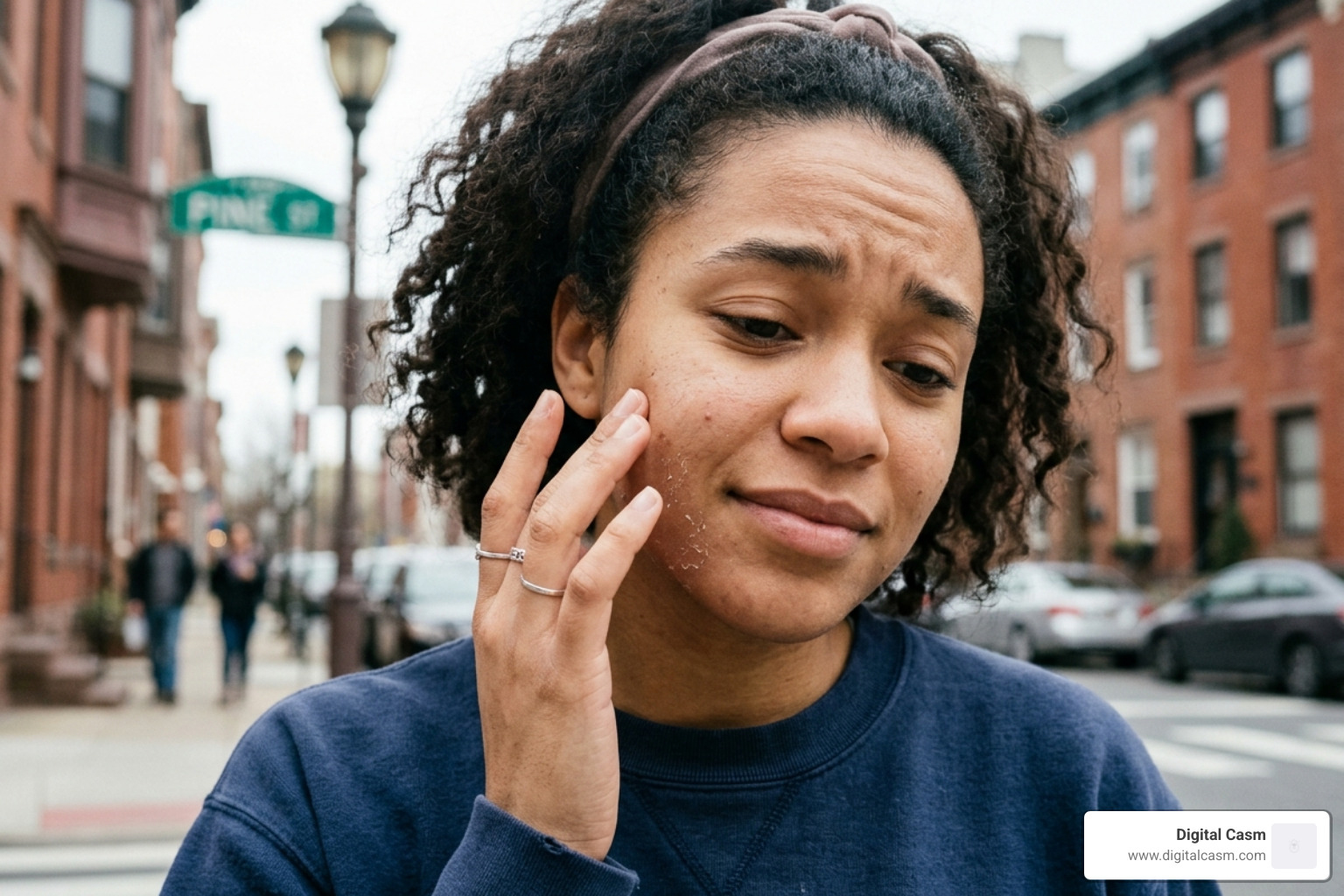
If you’ve ever looked in the mirror and felt like a lizard shedding its skin, you aren’t alone. Peeling skin on the face can be caused by a variety of factors. In April 2026, we are seeing more “environmental peeling” than ever before due to fluctuating indoor climates and urban pollutants.
Common causes include:
- Seasonal Dryness: Cold winds and dry heaters strip moisture, leaving behind a “scaly” texture.
- Sunburn Recovery: Your skin is trying to rid itself of damaged cells.
- Aging: As we move through 2026, research continues to show that our natural cell regeneration slows down significantly as we age. Dead cells stay attached longer, causing that rough, “peely” look.
- Clogged Pores: Excess oil can trap dead skin, leading to a dull complexion and uneven texture.
Exfoliating with a diy face scrub for peeling skin helps by “ungluing” these stubborn dead cells. This process does more than just smooth the surface; it stimulates circulation and boosts collagen production. Think of it as clearing the runway so your expensive moisturizers can actually land and do their job. By removing the “dead weight,” we allow our skin’s moisture barrier to reset and heal.
Choosing the Right Ingredients for a diy face scrub for peeling skin
When your skin is already peeling, the last thing you want to do is treat it like a piece of sandpaper. We need to be surgical with our ingredient choices.
| Feature | Physical Exfoliants | Chemical Exfoliants |
|---|---|---|
| How it works | Manually buffs away cells with granules | Dissolves the “glue” between cells using acids |
| Best Ingredients | Colloidal oatmeal, bamboo powder, rice powder | Yogurt (Lactic acid), Apple (Malic acid) |
| Gentleness | High (if finely ground) | High (if low concentration) |
| Benefit | Instant smoothness | Deep pore cleaning and brightening |
Gentle Physical vs. Chemical Exfoliants
We love a “hybrid” approach. Combining a gentle physical buffer with a mild natural acid is the gold standard for diy face scrub for peeling skin.
- Colloidal Oatmeal: This is a powerhouse. It contains saponins (natural cleansers) and anti-inflammatory properties that soothe irritated skin.
- Yogurt: It’s rich in lactic acid. This is an Alpha Hydroxy Acid (AHA) that gently dissolves dead skin without the need for aggressive scrubbing.
- Fruit Enzymes: Apples (malic acid) and pineapples (citric acid) offer enzyme exfoliation that’s incredibly effective for sensitive types.
- Silica/Bamboo Powder: For those who want a traditional “scrub” feel, bamboo stem powder is a revelation. In 2026, it’s favored over sugar because its particles are tiny (around 200 micrometers) and perfectly round, meaning no micro-tears!
- Raw Honey: A natural humectant that draws moisture into the skin while acting as a gentle antibacterial agent.
Ingredients to Avoid for Peeling Skin
If you see these in a “face” recipe, run the other way:
- Coarse Sea Salt: Great for your heels, terrible for your cheeks. The jagged edges can cause redness and inflammation.
- Large Sugar Crystals: Unless they are very finely ground, they are too abrasive for peeling skin.
- Nutshells and Fruit Pits: These are notorious for causing micro-tears in the skin barrier.
- Microplastics: Aside from being terrible for the ocean (forming 4% of ocean plastic), they have no place in a natural wellness routine.
- Harsh Alcohols: These will only exacerbate the peeling by drying you out further.
5 Best Homemade Recipes to Stop the Peel
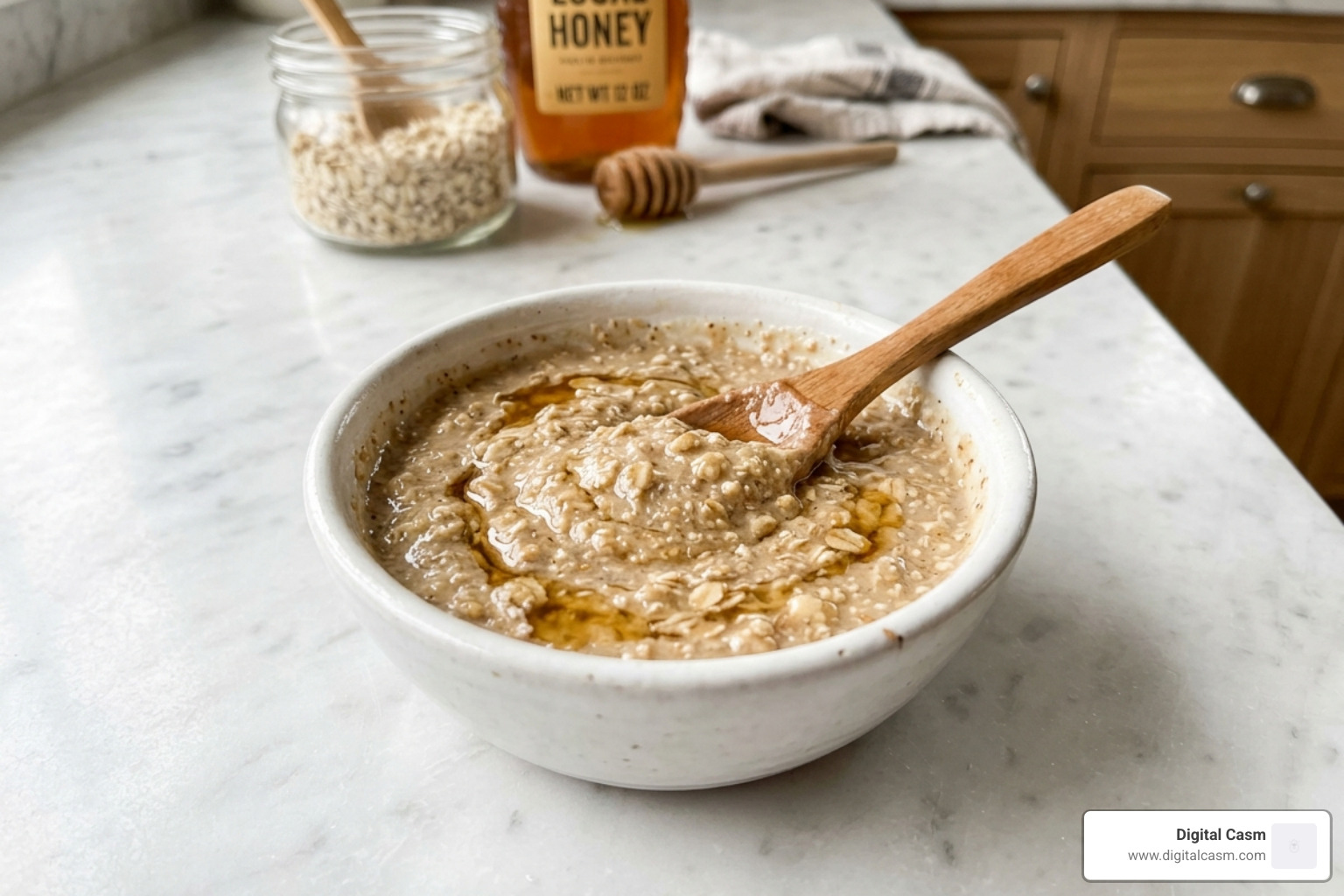
Ready to hit the kitchen? Grab a small mixing bowl and let’s get started. We recommend using these immediately or storing them in an airtight glass container in the fridge.
The Soothing Oatmeal and Yogurt Blend
This is our “go-to” for combination skin that feels irritated.
- Ingredients: 2 tbsp finely ground oats, 1 tbsp full-fat plain yogurt.
- Why it works: The yogurt’s lactic acid provides a cooling effect and chemical exfoliation, while the oats gently buff away flakes. It’s like a protein shake for your face.
The Hydrating Honey and Fine Sugar Scrub
Best for extreme dryness.
- Ingredients: 1 tbsp raw honey, 1 tbsp very fine brown sugar, 1/2 tsp jojoba oil.
- Why it works: Sugar contains glycolic acid, and honey is a humectant. Together, they ensure that as you remove the dead skin, you are immediately replacing it with a layer of hydration.
The Antioxidant Cranberry and MCT Oil Scrub
Perfect for sensitive skin that needs repair.
- Ingredients: 1 tbsp cranberry powder (or finely blended dried cranberries), 1 tbsp MCT oil.
- Why it works: Cranberries are packed with polyphenols that protect against oxidative stress. MCT oil is non-comedogenic and shelf-stable, making it great for those prone to breakouts.
The Brightening Apple and Honey Mask-Scrub
Great for oily skin that looks dull.
- Ingredients: 1 tbsp unsweetened applesauce (or grated apple), 1 tbsp honey.
- Why it works: This is an enzyme-heavy scrub. The malic acid in the apple does the heavy lifting, giving you a natural glow without any “grit” at all.
The Nourishing Banana and Oat Oil-Free Scrub
Ideal for acne-prone skin.
- Ingredients: 1/2 ripe mashed banana, 1 tbsp ground oats.
- Why it works: Bananas are rich in potassium and silica, which help boost collagen. This recipe provides a gentle buffing action without adding extra oils to the skin.
How to Use Your diy face scrub for peeling skin Safely
Even the most natural diy face scrub for peeling skin can cause issues if applied incorrectly. We want to heal the skin, not harass it!
Step-by-Step Application of a diy face scrub for peeling skin
- Cleanse First: Always start with a clean, damp face. Removing makeup first ensures the scrub can reach the skin.
- The Patch Test: We cannot stress this enough. Apply a small amount to your inner elbow or behind your ear. Wait 24 hours to ensure you don’t have a reaction to the natural enzymes or oils.
- Gentle Pressure: Use your ring fingers (they apply the least pressure). Move in small, upward circular motions.
- The 30-Second Rule: You don’t need to scrub for ten minutes. 30 to 60 seconds is plenty for the ingredients to work.
- Lukewarm Water: Never use hot water! It strips your natural oils. Rinse thoroughly with lukewarm water.
- Pat Dry: Don’t rub your face with a towel. Gently pat it dry to avoid mechanical irritation.
- Hydrate Immediately: Apply your favorite serum or moisturizer while your skin is still slightly damp to lock in the benefits.
Determining Frequency for a diy face scrub for peeling skin
How often should you exfoliate? In 2026 skincare, “less is often more.”
- Oily Skin: You can likely handle 2–3 times a week.
- Sensitive/Dry/Peeling Skin: Stick to once or twice a week. Over-exfoliating will damage your moisture barrier and actually cause more peeling.
- Nighttime Routine: We recommend exfoliating at night. This allows your skin to recover while you sleep and prevents sun sensitivity from the fresh cells being exposed to UV rays immediately.
- Seasonal Adjustments: In the winter, you might need to drop down to once a week, focusing more on hydration than buffing.
Conclusion
At Digital Casm, we believe that the best beauty treatments don’t come from a lab — they come from the earth (and occasionally your pantry). Taking the time to create a diy face scrub for peeling skin is a form of self-care that honors your body’s natural rhythms. By empowering yourself with these DIY spa hacks, you’re not just fixing a “skin problem”; you’re taking control of your wellness journey.
For more tips on natural treatments and home relaxation, visit us at Digital Casm.
What is the best ingredient for peeling skin?
Colloidal oatmeal is arguably the best. It is clinically proven to soothe irritation, provide a gentle physical exfoliation, and help restore the skin’s natural pH. When paired with a humectant like honey, it’s a peeling skin’s best friend.
Can I exfoliate a sunburned face?
No. Never exfoliate skin that is actively sunburned, chapped, or broken. Exfoliation is for the “recovery” phase once the heat has left the skin and you are dealing with the lingering flakes. If your skin is red or painful to the touch, stick to cooling aloe vera.
How long do DIY scrubs last in the fridge?
Because these recipes don’t contain commercial preservatives, they have a short shelf life. Scrubs containing water-based ingredients (like yogurt, apple, or banana) should be used immediately or kept in the fridge for no more than 2–3 days. Oil-and-sugar-based scrubs can last up to two weeks if kept in an airtight container and away from water.
